
How to Dye Your Wedding Dress: The 2026 Trend Turning One-Day Gowns Into Forever Pieces
Somewhere between the last dance and the dry cleaner’s garment bag, most wedding dresses go quiet. Research consistently shows the vast majority are worn once and then stored, sold, or forgotten - a strange fate for the most carefully chosen garment many of us will ever own. In 2026, a growing number of UK brides are rewriting that ending, and dyeing is leading the charge.
It’s easy to see why. A dye transformation is one of the fastest, most dramatic ways to turn “the dress I wore for eight hours” into “the dress I wear again and again.” No hemline changes, no pattern cutting required - just colour, expertly applied, that makes an ivory gown feel entirely new.
Why dyeing is having a moment in 2026
Sustainability is part of the story, but it’s not the whole story. Brides are increasingly rejecting the idea that a wedding dress has to be a one-wear investment. Circular bridal fashion — buying, wearing, and then transforming rather than discarding — has moved from niche to mainstream, and dyeing sits right at the centre of it.
There’s also a practical draw. Wedding dresses are, structurally, often excellent evening wear: well-made, beautifully finished, cut to flatter. The only thing standing between “bridal” and “black-tie” is often the colour. Dyeing solves that in a single step, which makes it one of the most accessible forms of dress upcycling available.
For brides who loved their dress but never want to see white again, this is the appeal in a sentence: same silhouette, same craftsmanship, completely different life.
The colours UK brides are choosing right now
Deep wine, burgundy and merlot tones are having a real moment, offering the drama of black with more warmth and personality. Dip-dye and ombré treatments are also trending, particularly in green paired with blue or purple undertones for a watercolour effect that keeps the bodice pale while the skirt deepens in colour. For brides who want something more subtle, dusty blush, powder blue, and soft grey washes are proving popular for a gentler, “barely-there” colour shift that still feels transformed.
The common thread across all of these choices is intentionality. Brides aren’t picking a colour because it’s trendy in isolation - they’re picking it because it fits the next chapter of the dress’s life, whether that’s a friend’s wedding, a work event, or simply hanging somewhere it will actually be worn.
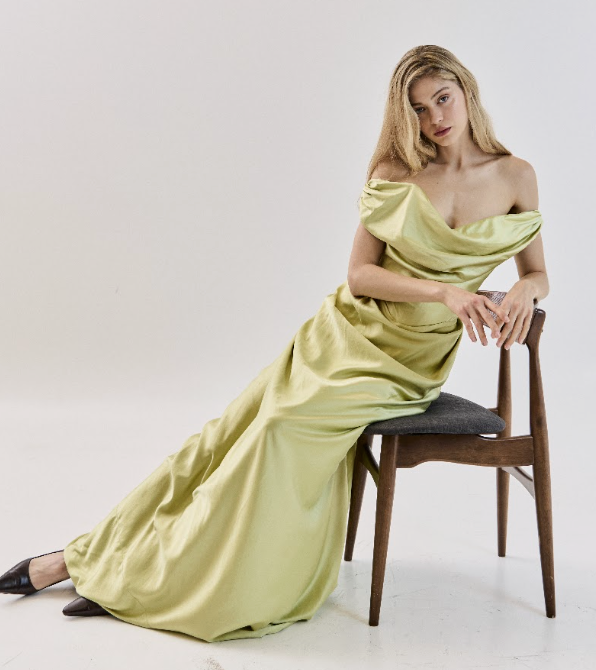
If you’re weighing up which shade suits your gown and your plans for it, Phini’s dye wedding dress service connects you with vetted UK designers who can talk through fabric-specific options before you commit.
What to know before you dye your dress
Not every gown behaves the same way under dye, and this is where working with a specialist genuinely matters. Fabric composition is the biggest variable: natural fibres like silk and cotton take dye beautifully and evenly, while synthetic fabrics such as polyester (extremely common in wedding dresses) require different techniques and won’t always reach the same depth of colour. A good designer will assess your fabric before quoting a result, not after.
Embellishment is the second consideration. Lace, beading, and appliqué can react unpredictably to dye baths - sometimes beautifully, sometimes not — so it’s worth discussing which details you want preserved in their original tone versus fully submerged in colour. Many designers offer partial or dip-dye techniques specifically to protect delicate bodice details while transforming the skirt.
Finally, colour correction is a real skill. This is the difference between a DIY dye kit and a professional result - and it’s exactly why 2026’s dyeing trend has been matched by growing demand for vetted specialists rather than home experiments.
Beyond dyeing: other ways to give your dress a second life
Dyeing isn’t the only route to a dress with a longer story, and it’s worth knowing your options before you decide.
If you love your silhouette but want to change more than colour — a shorter hem, removed sleeves, a converted neckline - a full wedding dress redesign can turn your gown into a completely different garment, dyed or not.
If the dress in question belonged to your mother, grandmother, or another relative, heirloom dress redesign is a more delicate process altogether, balancing sentimental preservation with a silhouette that fits how you actually want to wear it today.
And if you’re the one holding onto a bridesmaid dress you’ll never wear in its original form, the same logic applies: bridesmaids dress redesign - including dyeing — is one of the fastest-growing categories on Phini, as more wedding parties collectively decide their dresses deserve a second outing.
Why working with a vetted designer matters
Dyeing a wedding dress is not reversible, and the margin for error with irreplaceable fabric is genuinely small. The rise of this trend has brought with it a rise in horror stories — dresses ruined by well-meaning but inexperienced attempts, or generic dry cleaners applying techniques designed for everyday clothing rather than bridal fabric.
That’s the gap Phini exists to close. Every designer on the platform is vetted specifically for bridal transformation work, meaning they understand fabric behaviour, colour theory for dye baths, and how to protect the details that made you fall in love with the dress in the first place. You share what you’re picturing, they assess what your dress can actually do, and the result is a transformation you’re excited to wear rather than one you’re nervous about.
FAQs
Can any wedding dress be dyed?
Most can, but the result depends heavily on fabric. Natural fibres like silk and cotton dye most predictably; synthetic fabrics such as polyester and polyester blends can still be dyed but may need specialist techniques to achieve an even, saturated finish.
Will dyeing damage lace or beaded details?
It can affect them differently to the base fabric, which is why a professional assessment matters. Many designers use partial dyeing or protective techniques to preserve delicate embellishment while transforming the rest of the gown.
What’s the most popular wedding dress dye colour in 2026?
Sitting at top place currently are deep wine and burgundy tones. Dip-dye effects in green, blue, and purple are also trending for brides who want a softer transition of colour.
How long does dyeing a wedding dress take?
Timelines vary by designer and technique, but a straightforward full-dye typically takes a few weeks from consultation to completion, with more complex dip-dye or colour-correction work sometimes taking longer.
Is dyeing cheaper than buying a new dress?
Generally, yes. Dyeing an existing gown is usually significantly more affordable than purchasing a new evening dress of comparable quality, while also giving your wedding dress a genuinely meaningful second life.
If your wedding dress has been sitting in its bag since the big day, 2026 might be the year it comes back out. Whether you’re picturing pastel green, wine red, or a soft ombré wash, Phini’s dye wedding dress service connects you with vetted UK designers who’ll help you get the colour - and the result - right the first time.