
Wedding Dress Upcycling Ideas: What to Do With Your Dress After the Big Day (UK 2026 Guide)
It’s the morning after the wedding. Your dress is hanging in its garment bag, and the question every bride eventually asks pops into your head: what now? For decades, the answer was “preserve it and forget about it” — a box in the loft, opened maybe once a decade. But 2026’s brides are rewriting that script. Upcycling, the once-niche idea of giving a wedding dress new life, has become one of the most searched bridal topics in the UK this year, driven by a wider shift toward circular fashion and a growing reluctance to let a beautiful, expensive garment sit unused.
Why Wedding Dress Upcycling Is Having a Moment
A few things are converging to make this the year of the upcycled wedding dress. First, sustainability has moved from “nice to have” to a genuine purchasing priority — even within an industry as tradition-bound as bridal. Brides are asking harder questions about where their dress came from and what happens to it next, mirroring the same conscious-consumer instincts driving demand for organic silks, recycled lace and made-to-order gowns earlier in the wedding-planning process.
Second, dresses themselves have changed. Many 2026 bridal silhouettes are designed with transformation built in — think detachable sleeves and convertible necklines — which has normalised the idea that a wedding dress doesn’t have to be “one look, one day.” If designers are building flexibility into new gowns, it’s a short leap for brides to apply the same thinking to dresses they already own.
Third, there’s a sentimental pull that’s always existed but is now easier to act on. Mums and grandmothers kept wedding dresses in boxes because there was no accessible way to do anything else with them. Today, specialist redesign and dyeing services mean that heirloom gown can become a christening outfit, a cocktail dress, or a piece of art — without needing to track down a seamstress willing to take on delicate antique fabric.
Dyeing: The Fastest Way to Transform Your Dress
If your dress is structurally exactly what you want but the colour no longer suits your life — a stark white gown isn’t exactly versatile for a dinner party or a vow renewal — dyeing is the simplest upcycling route. A skilled dyer can take a traditional ivory or white gown and shift it into blush, sage, dusty blue, charcoal, or deep jewel tones, instantly making it wearable as evening wear rather than a one-occasion bridal piece.
This isn’t a DIY dye-bath job, though. Wedding dress fabrics are often delicate blends — silk, lace overlays, beaded appliqué, boning — that react unpredictably to off-the-shelf dye and can be ruined in a single wash. It’s worth working with someone who specialises specifically in dyeing wedding dresses, since they understand how different fabrics absorb colour and how to protect delicate details like beading or lace trim during the process.
Redesigning: Giving Your Gown a Second Life
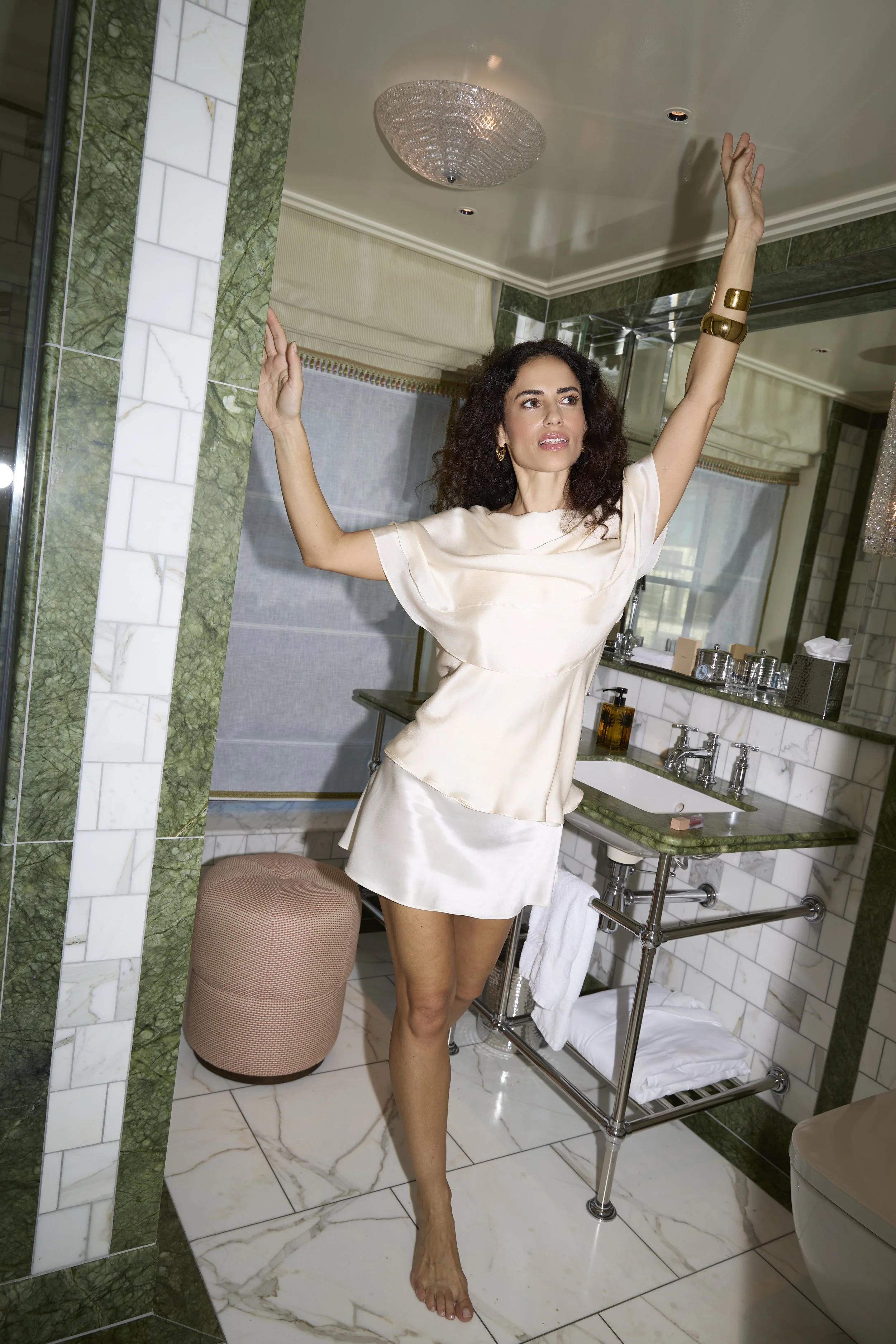
For brides who want more than a colour change, redesign is where upcycling gets genuinely creative. A full-length ballgown can become a knee-length cocktail dress, a detachable train can be removed to create something more practical for everyday wear, or sleeves and necklines can be restyled entirely. The goal is the same: keep the fabric and craftsmanship you already paid for, and reshape it into something you’ll reach for again.
This is particularly popular among brides planning a “first dance” or “trash the dress” style shoot, or those who simply want a going-away outfit that still feels connected to the wedding without the formality of a full bridal gown. Working with a vetted designer who specialises in wedding dress redesign means the alterations are done with an eye for preserving the best parts of the original gown — the lace, the beading, the cut — rather than starting from scratch.
Heirloom Restoration: Honouring a Family Dress
Not every upcycling story starts with your own wedding. A growing number of 2026 brides are choosing to wear (or repurpose) a mother’s, grandmother’s, or even great-grandmother’s wedding dress — continuing the “heirloom-quality lace, modern construction” trend that’s been a defining feature of this year’s bridal collections. But vintage fabric brings its own challenges: yellowing, brittle seams, outdated silhouettes, or sizing that simply doesn’t fit a modern frame.
Heirloom restoration sits at the intersection of conservation and redesign. It’s not just about altering a dress — it’s about respectfully updating decades-old fabric and lace so it can be worn again, while preserving the sentimental details that make it meaningful in the first place. If you’re sitting on a family dress that’s been boxed up for years, a specialist in heirloom dress redesign can assess what’s salvageable and talk you through realistic options before any cutting or dyeing happens.
Don’t Forget the Bridesmaids’ Dresses
Upcycling conversations tend to focus entirely on the bride, but bridesmaids are sitting on the same problem — a dress bought for one day, in a colour and style they didn’t necessarily choose, that’s unlikely to get worn again as-is. Dyeing a bridesmaid dress to a more versatile shade, or redesigning it into something with a completely different silhouette, turns a wardrobe dead weight into something genuinely wearable.
It’s also a thoughtful gift from a bride to her wedding party after the big day — a way of saying thank you that goes beyond a card. Services built around bridesmaids’ dress redesign typically work with several dresses at once, which can also work out more cost-effective than tackling one dress at a time.
How to Decide Which Route Is Right for You
If you love your dress but the colour limits how often you’ll wear it, dyeing is usually the quickest, least invasive option. If the silhouette itself feels too formal or bridal for everyday life, redesign gives you more flexibility to reshape it entirely. If the dress in question belonged to someone else — a family member’s gown you want to wear or pass down — restoration is about balancing sentimental preservation with practical wearability. And if your bridesmaids are still holding onto dresses they’ve never worn since the wedding, that’s worth raising as a group project.
Whichever route you’re drawn to, the most important first step is the same: talk to a designer who specialises in bridal fabrics before doing anything irreversible. Vetted specialists can tell you honestly whether a dress is a good candidate for dyeing versus redesign, what’s realistic given the fabric and construction, and roughly what to expect in terms of cost and turnaround.
Frequently Asked Questions
Can any wedding dress be dyed?
Most can, but the result depends heavily on fabric type. Natural fibres like silk and cotton take dye well, while certain synthetic satins and polyester blends can react unpredictably or resist colour altogether. A specialist will usually ask for fabric details or a swatch before confirming what’s achievable.
Will redesigning my dress damage the lace or beading?
Not if it’s done by someone experienced with bridal construction. Skilled redesigners work around delicate details, often repositioning or preserving lace appliqué and beadwork rather than removing it, so the most special parts of the dress carry through into the new design.
How much does it cost to upcycle a wedding dress?
Costs vary widely depending on whether you’re dyeing, redesigning, or restoring an heirloom piece, and how much work the fabric needs. As a guide, dyeing tends to be the most affordable option, while full redesigns and heirloom restorations cost more due to the skilled hand-finishing involved.
Is it too late to upcycle a dress that’s been stored for years?
Generally no, though older dresses may need more assessment first — checking for discolouration, fabric brittleness, or seam damage. A specialist in heirloom restoration can tell you what’s realistic before any work begins.
What can I do with my bridesmaids’ dresses if they don’t want to keep them as-is?
Dyeing them a different colour or redesigning the silhouette into something more versatile (like a shorter or simpler cut) are the two most popular options, and tackling several dresses from the same wedding together can be more cost-effective than doing them individually.
Ready to Give Your Dress a Second Life?
Whether you’re dreaming of a deep emerald gown for date nights, a shorter silhouette for your next big event, or simply want to know if your grandmother’s lace can be saved, the right place to start is a conversation with a specialist who understands bridal fabric. Explore wedding dress redesign options at Phini and find a vetted designer who can turn your one-day dress into something you’ll wear for years to come.